President Mirziyoyev Reviews Reforms to Enhance Land Use Efficiency and Expand Agricultural Investment
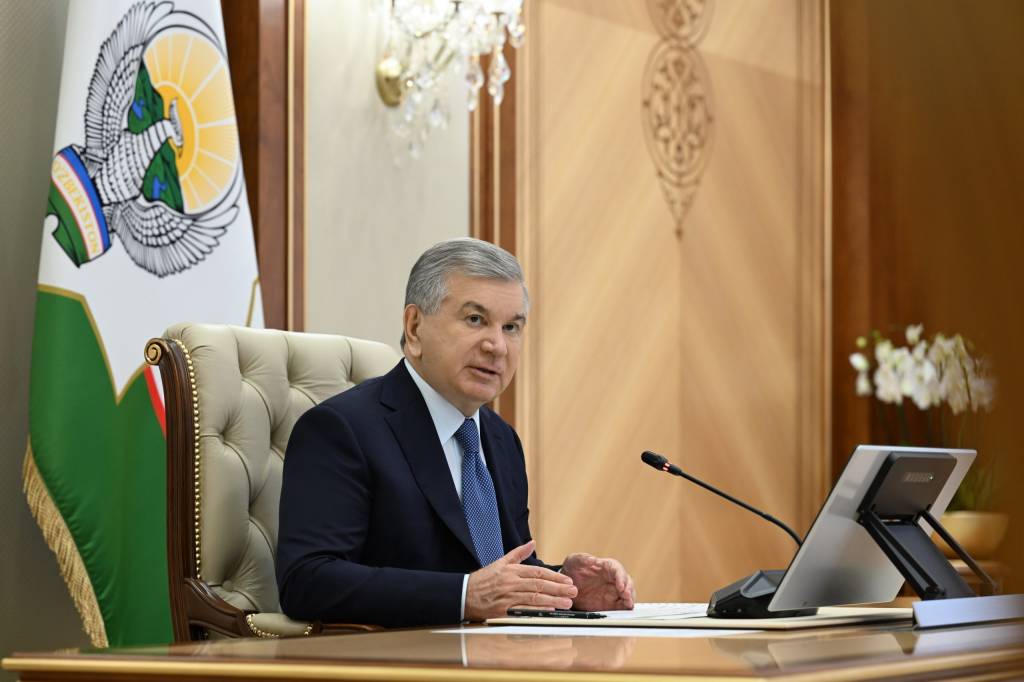
Tashkent, The Gulf Observer: President Shavkat Mirziyoyev reviewed a comprehensive set of proposals aimed at improving the efficiency of land resource utilization and advancing ongoing land reforms in Uzbekistan.
Over the past five years, Uzbekistan has implemented significant reforms in land relations, including the abolition of regional governors’ authority to allocate land and the transition to an auction-based system. During this period, more than 616,000 hectares of land were distributed through auctions, generating 1.4 trillion UZS in state revenue. Officials noted that the introduction of private stewardship has led to a threefold increase in productivity, with income per hectare reaching 50–60 million UZS, while annual output from these lands now exceeds 539 trillion UZS and exports total $2.1 billion.
Despite these achievements, several challenges persist, including limited independence for tenants in land use and the underutilization of approximately 117,600 hectares. To address these issues, authorities plan to introduce a new leasing framework and offer an additional 100,000 hectares for auction this year under revised conditions, with enhanced economic incentives for efficient land use.
The president highlighted the success of pilot initiatives allowing farmers to independently select crops in regions such as Fergana Valley, Jizzakh, Tashkent, and Karakalpakstan. In 2025, entrepreneurs cultivated high-yield, export-oriented crops on 16,000 hectares, generating a foundation for exports valued at $150 million. The expansion of such practices and increased economic autonomy for land users were emphasized as key priorities.
Plans were also outlined to auction land plots ranging from 50 to 500 hectares for industrial plantations and livestock projects, with at least five major initiatives to be launched in each region this year. These projects will be supported through financial measures, including subsidized infrastructure costs, concessional loans with grace periods, interest compensation, and subsidies covering up to 50 percent of packaging expenses.
The presentation underscored the importance of adopting advanced international agricultural technologies while safeguarding national interests. New regulations will revise conditions for allocating land to foreign investors, introducing a secondary leasing mechanism and requiring a minimum investment of $10 million, particularly targeting the development of unused and pasture lands. Strategic land categories, including border, defense, and cultural sites, will remain reserved for citizens.
In addition, proposals were introduced to establish unified lease terms of up to 49 years, streamline lease extension procedures through digital platforms, and integrate data systems across cadastre, agriculture, and justice authorities. Efforts will also focus on digitizing land management processes, improving transparency, and enabling the use of land lease rights as financial instruments for loans, leasing, and guarantees.
The president further called for strengthened accountability in land control, expanded legal frameworks to address unauthorized land use, and improved mechanisms for compensation and land reclassification. Dedicated regional directorates and investment companies will be established to provide services to land users and investors, serving as a bridge between government bodies and the private sector.
Concluding the review, President Mirziyoyev issued directives to accelerate land reform, enhance productivity, ensure transparency for entrepreneurs, and advance the digital transformation of land management systems.