Indonesia to Expand School Revitalization and Digitalization Program in 2026
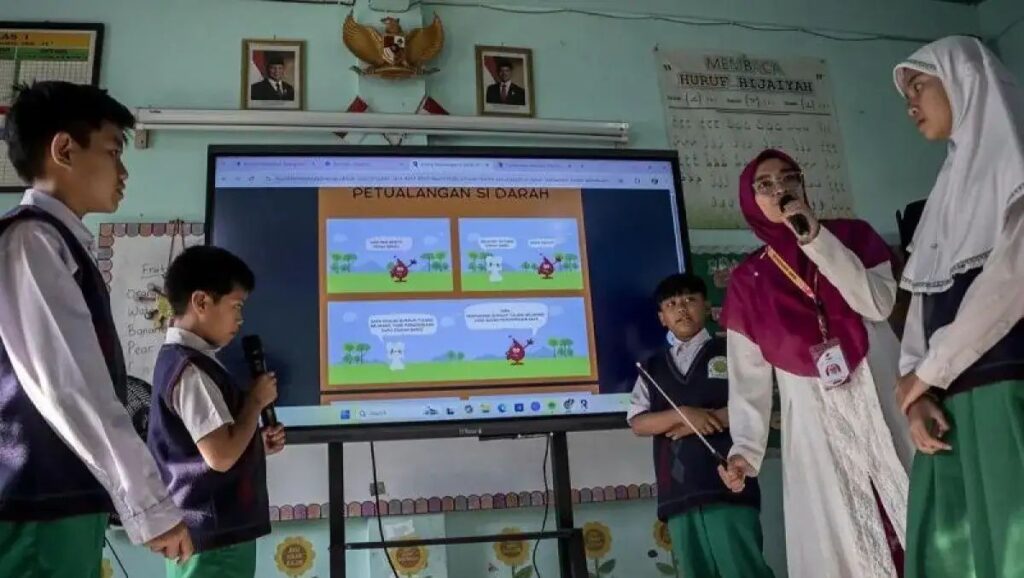
Banyamus, The Gulf Observer: Indonesia’s Minister of Primary and Secondary Education Abdul Mu’ti has announced that the government will continue and expand its nationwide school revitalization and digitalization program in 2026, aiming to enhance the quality of education across the country.
Speaking at the inauguration of school revitalization projects in Banyumas District on Saturday, the minister congratulated schools that received assistance and digital interactive boards in 2025, urging them to utilize the facilities effectively to improve learning outcomes.
He stated that the initiative forms part of the government’s broader priority to ensure equitable access to quality education while promoting the integration of technology in classrooms.
According to Mu’ti, the government has allocated Rp14 trillion (approximately US$814 million) for the 2026 program, which will cover 11,744 schools nationwide. Additional funding has also been proposed to expand the initiative to as many as 60,000 schools.
To further support digital learning, the government plans to increase the number of Interactive Flat Panels (IFPs) — large 4K touchscreen displays used as digital whiteboards — to two to three units per school, enhancing modern teaching capabilities.
The minister also highlighted plans to expand the Indonesia Smart Program (PIP), with the number of beneficiaries expected to reach approximately 19.6 million students from elementary to high school levels. For the first time, around 888,000 kindergarten students will also be included in the scheme.
In addition, incentives for teachers receiving honorariums will be increased from Rp300,000 to Rp400,000 per month, reflecting the government’s commitment to supporting educators.
“Education budget is not reduced. Instead, it is increased to support priority programs and students’ character development,” Mu’ti emphasized.
He added that the 2026 revitalization program will prioritize schools affected by disasters, as well as those located in frontier, disadvantaged, and remote regions, along with institutions in severely damaged conditions.
The initiative underscores Indonesia’s continued efforts to strengthen its education system and ensure inclusive, technology-driven learning opportunities for all students.