Pakistan and Tajikistan Vow Enhanced Cooperation on Climate Resilience and Water Management

Islamabad, The Gulf Observer: Pakistan and Tajikistan have underscored the urgent need for bolstered regional cooperation to tackle shared environmental crises, ranging from rapid glacial melt and water scarcity to wildlife conservation.
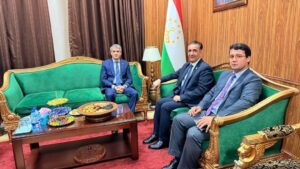
The consensus was reached during a high-level meeting between Federal Minister for Climate Change and Environmental Coordination, Dr. Musadik Masood Malik, and the Tajik Ambassador to Pakistan, Yusuf Sharifzoda, held in the federal capital on Thursday.
Strategic Focus on Dushanbe Water Conference
A primary focus of the discussion was the upcoming 4th High-Level International Conference on the International Decade for Action “Water for Sustainable Development” (2018–2028), scheduled to take place in Dushanbe. Dr. Musadik Malik is expected to represent the Prime Minister of Pakistan at this global forum, which aims to accelerate progress toward water-related goals.
Addressing the “Glacier Crisis”
Ambassador Sharifzoda highlighted the striking environmental parallels between the two nations, noting that both Pakistan and Tajikistan are home to approximately 13,000 glaciers each. However, he warned of the devastating impact of global warming, revealing that both countries have already lost roughly 1,000 glaciers due to climate change.
“There is a critical need for stronger regional collaboration to tackle the growing environmental threats posed by glacial melt,” the Ambassador stated.
Wildlife and Regional Connectivity
The meeting also touched upon the preservation of shared biodiversity. The Ambassador noted that both countries serve as habitats for rare species, including:
- Markhor
- Snow Leopards
- Ibex
- Various Migratory Birds
Tajikistan has already established protected conservation zones and expressed a strong interest in formalizing joint wildlife protection through Memorandums of Understanding (MoUs).
A Vision for a “Regional Climate Corridor”
Responding to these proposals, Dr. Musadik Malik emphasized the nexus between energy, water, and climate, asserting that these challenges cannot be solved in isolation. He proposed the establishment of a regional corridor between Pakistan and Tajikistan. This corridor would serve a dual purpose:
- Environmental Synergy: Streamlining cooperation on climate resilience and wildlife protection.
- Economic Integration: Enhancing trade and broader regional connectivity.
Dr. Malik reaffirmed Pakistan’s commitment to its “brotherly ties” with Tajikistan, emphasizing that the deep-rooted historical and cultural connections between the two peoples provide a strong foundation for future sustainable development initiatives.