Ajami Nakhchivani’s 900th Anniversary Celebrated During Azerbaijani Culture Days in Turkmenistan
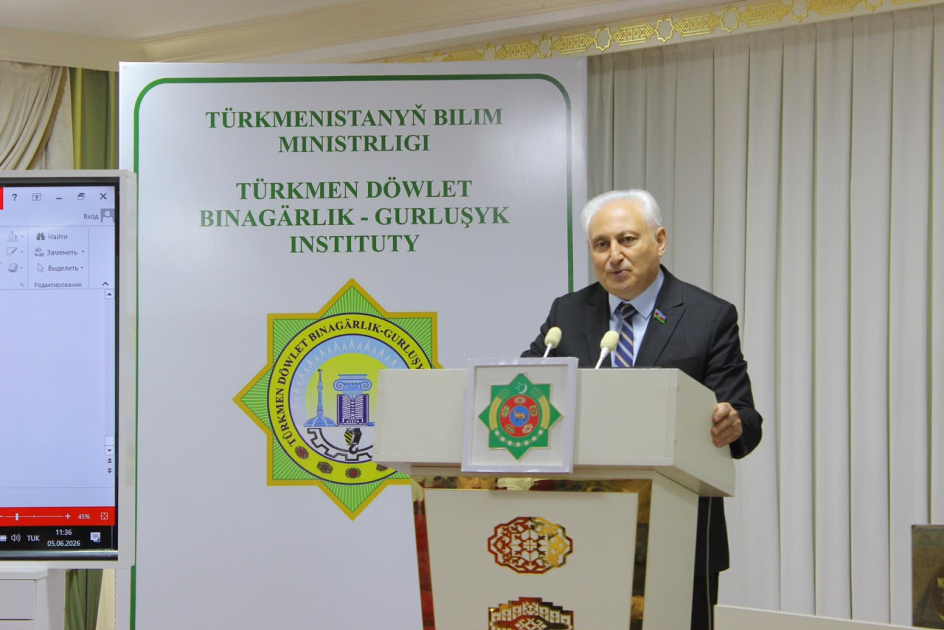
Ashgabat, The Gulf Observer: An event commemorating the 900th anniversary of renowned medieval architect Ajami Nakhchivani was held at the Turkmen State Institute of Architecture and Construction as part of the Azerbaijani Culture Days in Turkmenistan.
The ceremony brought together university officials, faculty members, students, and distinguished guests to honor the legacy of one of the most influential figures in Azerbaijani architecture.
Addressing the gathering, Professor Kerim Tahirov, Director of the National Library of Azerbaijan, described Ajami Nakhchivani as a leading representative of medieval Azerbaijani architecture. He noted that the architect’s 900th anniversary is being celebrated at the state level and has been included in UNESCO’s 2024–2025 commemorative program.
During the event, Professor Rahiba Aliyeva of the Institute of Architecture and Art of the Azerbaijan National Academy of Sciences presented a report titled “Ajami Nakhchivani and Classical Azerbaijani Architecture.” She highlighted the architect’s enduring contributions, emphasizing that the Momine Khatun Mausoleum and the Yusif ibn Kuseyir Mausoleum remain outstanding masterpieces of 12th-century Azerbaijani and Turkic-Islamic architecture.
Speaking on the topic “Seljuk Architecture and Ajami Nakhchivani,” Azerbaijani Member of Parliament Hikmat Mammadov, who is also a member of the Azerbaijan–Turkmenistan interparliamentary friendship group, underscored the architect’s significance within the broader context of Turkic-Islamic architectural heritage. He stated that while Seljuk architecture represents one of the highest achievements of Turkic-Islamic civilization, its Azerbaijani branch found its finest expression in the works of Ajami Nakhchivani.
The event concluded with an interactive session during which the speakers answered questions from attendees, further highlighting the historical and cultural importance of Ajami Nakhchivani’s architectural legacy.