Morocco, US Reaffirm Counterterrorism Partnership, Expand Defense Cooperation
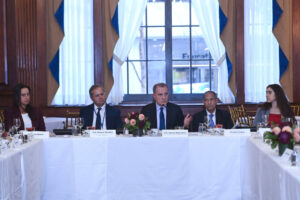
Marrakech, The Gulf Observer: Morocco and the United States have reaffirmed their commitment to strengthening bilateral counterterrorism cooperation during a high-level dialogue held in Washington on July 8, underscoring a longstanding security partnership that is approaching its 250th year.
The dialogue was co-chaired by Monica Jacobsen, Acting Principal Deputy Coordinator for Counterterrorism at the US Department of State, and Ismail Chekkori, Director of Global Affairs Issues at Morocco’s Ministry of Foreign Affairs.
During the meeting, both sides agreed to build on existing initiatives to combat terrorist organizations, including Al-Qaeda in the Islamic Maghreb (AQIM), Daesh (ISIS), and other groups designated as Foreign Terrorist Organizations by Morocco and the United States. Discussions also focused on enhancing coordination on terrorist designations, countering terrorism financing, and addressing extremist violence in the Sahel region.
According to the US Embassy in Rabat, the dialogue highlighted the enduring partnership between the two countries in promoting regional security and stability. Both governments reaffirmed their commitment to working closely together to counter evolving terrorist threats and safeguard the interests of their citizens.
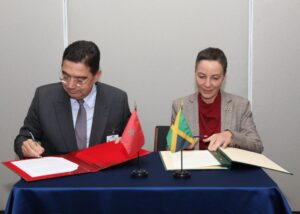
In a further demonstration of expanding defense ties, the Royal Armed Forces (FAR) and the US Africa Command (AFRICOM) signed a memorandum of understanding on July 13 at AFRICOM headquarters in Stuttgart, Germany, to establish the Africa Multidomain Training and Experimentation Center (AMTEC) in Tan-Tan, Morocco, by 2030.
The agreement was signed by Inspector General of the Royal Armed Forces General Mohammed Berrid, who led the Moroccan delegation on the instructions of King Mohammed VI, and AFRICOM Commander General Dagvin Anderson.
The planned AMTEC facility will comprise three major components: a Multidomain Training Area capable of operating across the electromagnetic spectrum and contested environments, a Drone Academy to train Moroccan and African partner nation operators and instructors, and an Innovation and Experimentation Center focused on developing cost-effective technologies to strengthen counterterrorism and regional security capabilities.
The Drone Academy will play a central role in enhancing counterterrorism operations in West Africa by training personnel in the integration of small unmanned aerial systems, intelligence, surveillance and reconnaissance, strike operations, and airspace coordination.
General Berrid said Morocco’s existing military infrastructure and skilled personnel would enable the center to rapidly transition from concept to operational capability while providing new opportunities for joint innovation and defense industrial cooperation between Morocco and the United States.
General Anderson described AMTEC as an important platform for American and African defense industries and academic institutions to collaborate on emerging technologies and develop scalable solutions to regional security challenges. He added that the African Lion 2027 exercise would serve as the first proof of concept for the new center.
Both the Washington counterterrorism dialogue and the AMTEC agreement are part of the 2026–2036 Morocco-US Defense Cooperation Roadmap, signed in Washington on April 15, which provides a comprehensive framework for expanding bilateral military and security cooperation.
The roadmap has also gained momentum through provisions included in the Fiscal Year 2027 National Defense Authorization Act (NDAA) introduced by the US Senate Armed Services Committee. The legislation calls for a comprehensive plan to further strengthen defense cooperation with Morocco, including enhanced counterterrorism collaboration, modernization of Moroccan armed forces through American defense systems, establishment of an all-domain training complex, creation of a drone center of excellence, expansion of joint military exercises such as African Lion, and deeper cooperation in cybersecurity, drone and counter-drone operations, hybrid warfare, artificial intelligence, and critical infrastructure protection.
Morocco has held the status of a Major Non-NATO Ally of the United States since 2004, and the US remains the country’s leading defense supplier, accounting for approximately 60 percent of Morocco’s arms imports.