Vietnam PM Unveils Six-Point Agenda to Improve Business Climate and Drive Double-Digit Growth
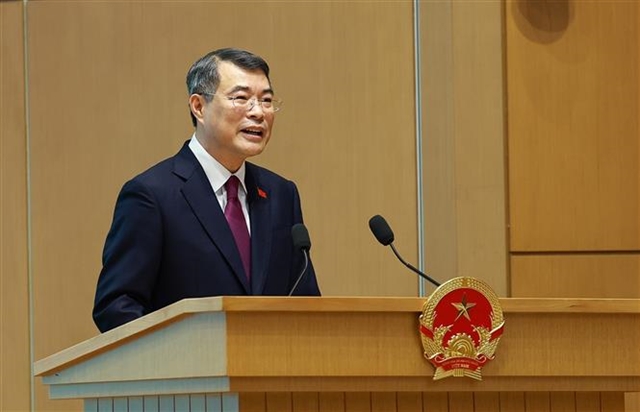
Hanoi, The Gulf Observer: Vietnamese Prime Minister Lê Minh Hưng has announced a comprehensive six-point agenda aimed at strengthening the country’s business environment, directing ministries, sectors and local authorities to resolve all business complaints promptly and publish official responses to ensure transparency and accountability.
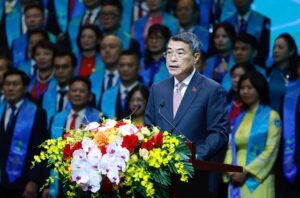
Addressing the first meeting between the new Government Standing Committee and the business community on Saturday, the Prime Minister described businesses as the driving force behind Việt Nam’s ambition to achieve sustainable double-digit economic growth.
PM Hưng reaffirmed the Government’s commitment to creating a transparent, stable and predictable business environment, emphasizing that all legitimate concerns raised by businesses would be addressed with practical and measurable outcomes.
The six priority areas include accelerating institutional reforms and administrative simplification; improving access to capital, land and investment resources; reducing business costs while expanding market opportunities; promoting innovation, digital transformation and high-quality human resource development; strengthening cooperation among State-owned, private and foreign-invested enterprises; and enhancing policy implementation and administrative discipline.
The Prime Minister directed ministries to continue reviewing legislation governing investment, land, planning, construction, taxation, customs and specialised inspections to eliminate regulatory overlaps and inconsistencies. Ministries were also instructed to prepare implementing decrees and circulars alongside draft legislation to prevent legal gaps after new laws are enacted.
Warning against bureaucratic delays, PM Hưng said heads of ministries, agencies and local governments would be held personally accountable for slow administrative procedures or the introduction of unnecessary requirements beyond existing regulations.
To improve financing conditions, the Government pledged to strengthen capital and corporate bond markets while expanding access to bank credit, particularly for small and medium-sized enterprises (SMEs). Authorities were also instructed to accelerate the resolution of delayed investment projects, land clearance, tax refunds and public investment disbursement to prevent businesses from facing prolonged administrative obstacles.
The Prime Minister further called for reducing logistics costs, simplifying specialised inspections and lowering regulatory compliance expenses to enhance business competitiveness.
On trade promotion, PM Hưng said the success of government programmes should be measured by tangible outcomes such as export contracts, market expansion and increased market share. Overseas trade offices were instructed to work more closely with businesses to maximise opportunities under Việt Nam’s free trade agreements.
Innovation, digital transformation and green growth were identified as key pillars of future economic development. Relevant ministries were tasked with introducing policies to encourage investment in research and development, artificial intelligence, digital technologies and environmentally sustainable industries, while strengthening cooperation between universities, research institutions and the private sector.
The Prime Minister also stressed the importance of developing large domestic enterprises capable of competing regionally and globally. He said State-owned enterprises should lead strategic sectors, infrastructure development and digital transformation, while private enterprises should become a major engine of economic growth through innovation and stronger integration into global supply chains. Foreign direct investment policies, he added, should increasingly prioritise quality, technology transfer, localisation and workforce development.
The announcements followed a Government review of 53 groups of concerns submitted by the business community, many of which remain unresolved. PM Hưng instructed ministries and local authorities to immediately resolve issues within their legal authority while proposing legislative solutions for matters requiring higher-level approval.
To ensure transparency, he ordered that all official responses to business petitions be published on the Government Portal, the websites of relevant ministries and the Vietnam Chamber of Commerce and Industry (VCCI), enabling businesses and the public to assess the effectiveness of government actions.
“We must move from dialogue to decisive action and from commitments to concrete results,” the Prime Minister said, adding that success would ultimately be measured by lower compliance costs, faster administrative procedures and stronger business confidence in Việt Nam’s investment environment.
As of the end of June, Việt Nam had more than one million active enterprises with combined registered capital exceeding VNĐ30 quadrillion. The business sector contributes more than 60 percent of the country’s GDP, generates 55 percent of State budget revenues and provides employment for over 17.6 million people.
Despite these achievements, PM Hưng acknowledged continuing challenges, noting that State-owned enterprises have yet to realise their full potential, private businesses remain largely small and medium-sized with limited capital and technology, while foreign-invested enterprises continue to have weak linkages with domestic suppliers.
He reiterated that the Government would continue strengthening institutional reforms, promoting innovation, digital transformation, green growth and equal access to resources, while encouraging businesses to actively contribute policy recommendations ahead of upcoming National Assembly sessions focused on institutional reform.
Expressing confidence in closer Government-business cooperation, the Prime Minister said the partnership would help unlock national resources, enhance competitiveness and support Việt Nam’s long-term objective of achieving sustainable double-digit economic growth.