Hundreds of Musicians Unite at Bandung Angklung City Festival to Celebrate Indonesia’s Cultural Heritage
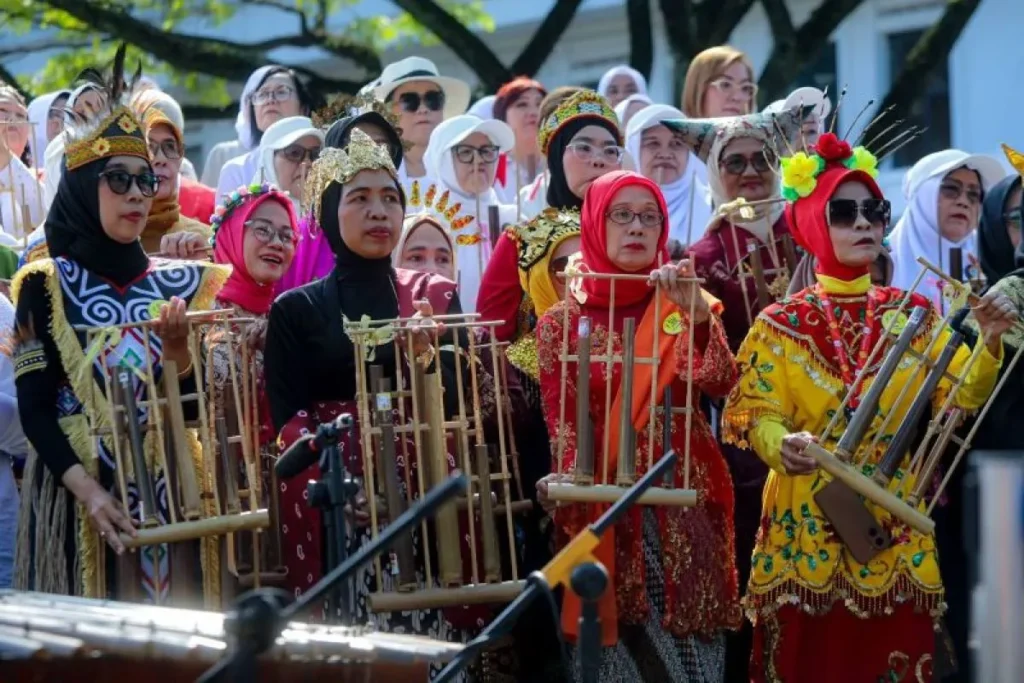
Bandung, The Gulf Observer: Approximately 500 musicians participated in the Bandung Angklung City Festival 2026, a major cultural event aimed at strengthening collaboration among artists and preserving the angklung, the traditional bamboo musical instrument recognized by UNESCO as an Intangible Cultural Heritage of Humanity.
Speaking at the festival, Bandung City Secretary Iskandar Zulkarnain emphasized that the angklung represents far more than a musical instrument. He described it as a symbol of unity that embodies the values of mutual cooperation, tolerance, harmony, and social cohesion.
“The festival demonstrates to Indonesia and the international community that Bandung is not only a center of creativity, education, and tourism, but also a city committed to preserving its cultural heritage responsibly,” he said.
According to Zulkarnain, the philosophy of the angklung illustrates how diversity can become a source of strength when individuals work together in a spirit of cooperation. He stressed that preservation efforts must extend beyond maintaining the instrument’s existence and should focus on ensuring it remains actively played, studied, appreciated, and passed on to younger generations.
The official noted that the angklung serves as a powerful lesson in cooperation and inclusivity, showing that differences should unite communities rather than divide them.
Meanwhile, Adi Junjunan Mustafa, Head of Bandung’s Culture and Tourism Agency, highlighted that the Bandung Angklung City Festival has now entered its fifth year since Bandung was officially designated as a center for angklung preservation.
The 2026 festival was preceded by a month-long “Road to Bandung Angklung City Festival” program held throughout May at five major shopping centers across the city, including Bandung Indah Plaza, Cihampelas Walk, The Botanica Mall Bandung, Summarecon Mall Bandung, and Festival Citylink.
A total of 57 angklung groups participated in the pre-festival activities, attracting around 1,000 visitors and generating widespread public engagement with the traditional art form.
Mustafa described the festival as more than a cultural performance, calling it a collective movement dedicated to safeguarding Indonesia’s cultural heritage while reinforcing Bandung’s identity as the nation’s leading center of angklung culture.
“As a UNESCO-recognized cultural heritage, the angklung is not only a traditional musical instrument but also a representation of cooperation, tolerance, and togetherness,” he said. “Its preservation as part of Bandung’s identity must continue.”
Organizers expressed hope that broader cooperation among government institutions, cultural organizations, educational institutions, community groups, and the public will further strengthen Bandung’s status as Indonesia’s Angklung City and ensure the continued preservation of one of the country’s most treasured cultural traditions.