Kazakhstan Strengthens “Law and Order” Framework as PM Bektenov Leads Crime Prevention Reforms
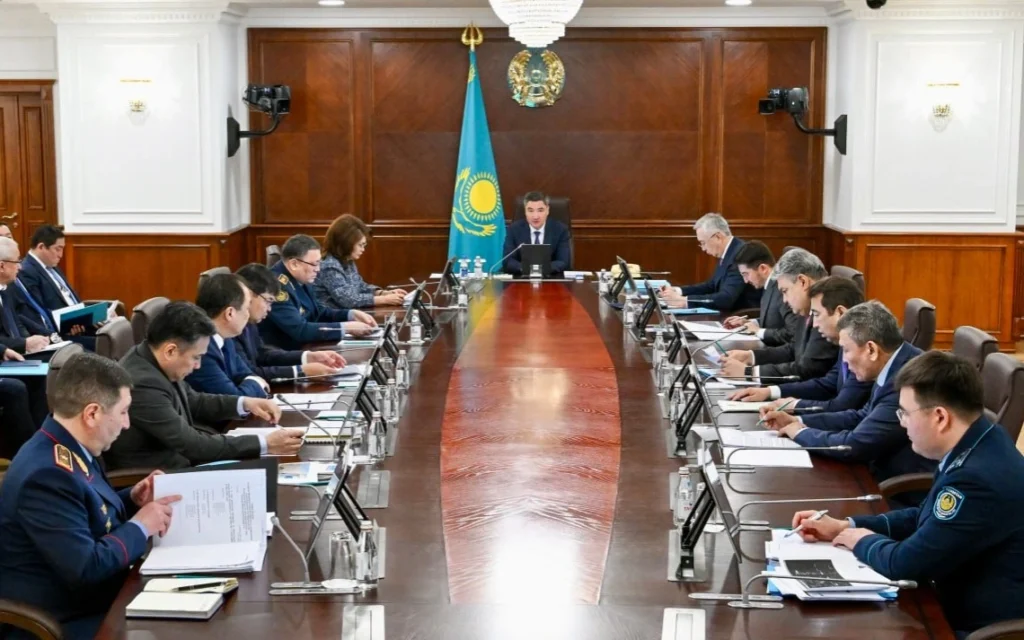
Astana, The Gulf Observer: Olzhas Bektenov chaired a meeting of the Interdepartmental Commission on Crime Prevention under the Government of Kazakhstan on Monday, focusing on strengthening the constitutional principle of “Law and Order” and enhancing national public safety mechanisms.
The session reviewed measures to ensure effective implementation of the Constitution adopted through the March 15 nationwide referendum, which enshrines “Law and Order” as a fundamental principle aimed at reinforcing the rule of law, ensuring public security, and promoting zero tolerance toward offenses.
Prime Minister Bektenov noted that the Law “On Crime Prevention,” signed by the Head of State last year and enacted on March 2, 2026, expands the range of entities responsible for crime prevention and broadens the mandate of the Commission. He emphasized that the new framework calls for the active involvement of government institutions, citizens, and local communities in building a comprehensive prevention system.
“The concept is designed to unite the efforts of state agencies and civil society institutions, focusing on early warning mechanisms, interagency coordination, and the development of modern security infrastructure,” Bektenov said.
The meeting highlighted a series of measures introduced under the national Action Plan, including biometric identification for mobile subscribers to counter online fraud, and progress toward ratifying international instruments such as the Council of Europe Convention on Cybercrime. Authorities have also introduced criminal liability for stalking and forced marriage, alongside expanded efforts to combat domestic violence, including psychological intervention programs for offenders.
According to the Ministry of Internal Affairs, these reforms have contributed to a 6 percent reduction in crime last year and a further 9 percent decline in the first quarter of 2026. However, Yerzhan Sadenov, Minister of Internal Affairs, noted that challenges remain in several regions, particularly in police infrastructure, traffic monitoring systems, and communications.
Bektenov instructed local executive bodies (akimats) to conduct detailed assessments and ensure the full implementation of preventive measures, while also emphasizing the need to strengthen law enforcement resources and expand infrastructure through public-private partnerships.
Deputy Prime Minister and Minister of Culture and Information Aida Balayeva reported on initiatives to enhance public legal awareness, while Deputy Prime Minister and Minister of Artificial Intelligence and Digital Development Zhaslan Madiyev outlined measures to safeguard personal data, including increased penalties for cybersecurity violations, biometric authentication systems, anti-fraud centers, and tighter regulation of SIM cards.
The Prime Minister called for intensified efforts to combat cybercrime, accelerate the rollout of the “Digital Policeman” project, expand cyber-volunteering initiatives, and strengthen specialist training in the field. He also directed the relevant authorities to complete procedures for ratifying the Council of Europe Convention on Cybercrime.
In addition, the Ministry of Health has been tasked with expanding psychological correction programs for individuals prone to violence and improving access to crisis center services.
Bektenov concluded by stressing that ensuring public safety within communities remains a core responsibility of local authorities, and instructed the Ministry of Internal Affairs to enhance coordination mechanisms to ensure effective implementation of the Public Safety Concept nationwide.