Morocco Expands Social Dialogue Framework with Major Wage Increases and Social Protection Measures: Akhannouch
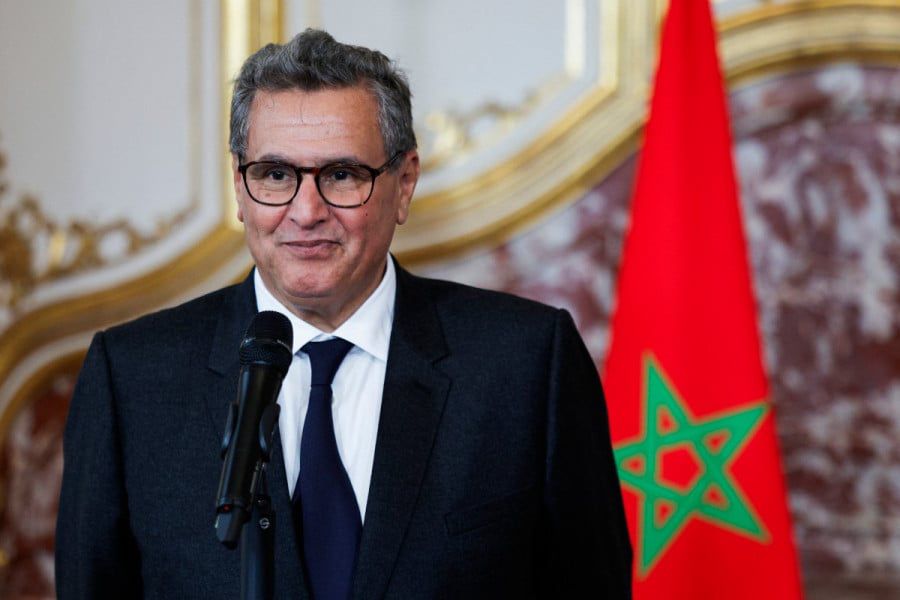
Rabat, The Gulf Observer: Morocco has elevated social dialogue into a central pillar of its political and economic strategy, Head of Government Aziz Akhannouch said on Friday, emphasizing that engagement with labor unions and social partners is a long-term policy commitment rather than a short-term response to economic challenges.
Speaking during the April round of the national social dialogue session in Rabat, Akhannouch underlined that the government’s approach is focused on strengthening purchasing power, safeguarding workers’ dignity, and improving household incomes as part of Morocco’s broader vision of building a “social state.”
“The executive has never approached social dialogue as a circumstantial commitment, but as a clear political choice,” he stated, noting that the aim is to translate negotiations into tangible benefits for civil servants, employees, and families, particularly amid rising living costs.
Aligned with the directives of King Mohammed VI, the government has transitioned from ad hoc crisis management to a structured and institutionalized dialogue framework, supported by defined timelines, mechanisms, and enforceable commitments.
Akhannouch highlighted the April 30, 2022 agreement as a turning point that revitalized engagement with labor unions and employers, transforming it into a results-driven process addressing workers’ everyday concerns.
Key public sector reforms include raising the net minimum salary from 3,500 dirhams to 4,500 dirhams, abolishing salary scale 7, increasing promotion quotas to 36 percent, and enhancing family allowances. In the private sector, the government implemented a 20 percent increase in the minimum wage for industry, commerce, and liberal professions, alongside a 25 percent rise in the agricultural minimum wage.
The prime minister also pointed to “human-centered” pension reforms, including lowering the eligibility threshold for retirement benefits from 3,240 to 1,320 contribution days and increasing old-age pensions by 5 percent with retroactive effect.
Following the April 29, 2024 agreement, the government introduced a second phase of reforms, including a general net salary increase of 1,000 dirhams for civil servants and public sector employees who had not previously benefited from pay revisions.
Akhannouch revealed that nearly 46 billion dirhams will be mobilized by 2026 to finance wage increases and related social commitments. He noted that approximately 4.25 million people have already benefited from income improvements, including 1.25 million public sector employees and 3 million private sector workers.
Beyond wages, the government has implemented measures to cushion citizens against inflation, including support for transport professionals and reductions in electricity costs. Financial assistance to the road transport sector alone reached 8.63 billion dirhams, distributed over 16 installments between March 2022 and May 2024.
The prime minister also underscored the significance of the Royal Direct Social Assistance Program, launched in December 2023, which has disbursed 52 billion dirhams to more than 3.9 million families—benefiting over 12 million people.
He concluded that these comprehensive measures have helped maintain Morocco’s macroeconomic stability while easing financial pressure on households and businesses, positioning social dialogue as a cornerstone of the country’s ongoing social and economic development.