President Mirziyoyev Approves Sweeping Social Protection Reforms to Expand Services and Strengthen Legal Framework
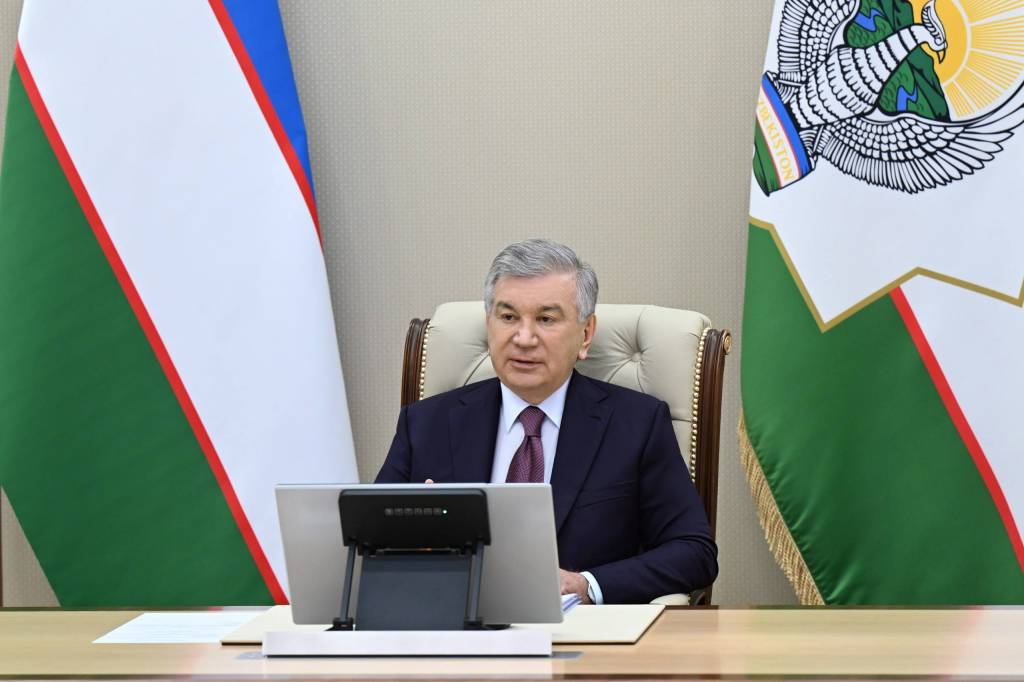
Tashkent, The Gulf Observer: President Shavkat Mirziyoyev has reviewed and approved a comprehensive package of reforms aimed at enhancing social protection, expanding service coverage, and strengthening the legislative framework to support vulnerable segments of society.
The proposals, presented during a high-level briefing, focus on improving the quality, accessibility, and transparency of social services while ensuring targeted assistance to those most in need. Over recent years, Uzbekistan has undertaken significant reforms to modernize its social protection system, emphasizing digitalization and proactive delivery of services.
Special priority is being given to persons with disabilities, individuals requiring constant care, families raising children with disabilities, women affected by harassment and violence, and entrepreneurs engaged in providing social services.
A key highlight of the reforms is the planned introduction of a new “Early Intervention” service for children aged 0 to 3 with developmental disorders. Set to roll out in stages by June 1, 2026, the initiative will provide corrective, pedagogical, and physical therapy support through specialized educators and therapists. These services will be delivered by non-governmental organizations registered in a dedicated electronic system.
Additionally, the State Health Insurance Fund will cover expenses related to advanced medical examinations and surgeries for children born with anatomical conditions.
For individuals with mental disabilities in Groups I and II, a series of new services will be introduced throughout 2026. These include the “Yangi Kun” daytime care program, home-based care services, supported small group homes under the “Madad” initiative, and short-term placement options in a “Social Respite” format. These services aim to support families, enhance daily living skills, and improve social and economic independence.
The reforms will be implemented through public-private partnerships, engaging up to 600 NGOs and entrepreneurs, and are expected to benefit more than 8,300 individuals with mental disorders in 2026 alone. Costs associated with these services will be subsidized by the State Social Protection Fund.
From September 1, 2026, a new monthly care allowance will also be introduced for legal guardians of adults over 18 with profound intellectual disabilities.
Institutional reforms are also underway, including the expansion of the role of “Inson” social service centers, whose staff will join guardianship and trusteeship commissions at local government levels. These centers will monitor the protection of rights, property safety, and cases of abuse involving vulnerable individuals.
Residential care institutions are set to undergo transformation, with existing “Muruvvat” homes being restructured into “Gamhurlik” (Care) centers, focusing on social integration, life skills development, and community-based living arrangements.
Legislative improvements were also discussed, including stronger penalties for disability-based discrimination, ensuring court decisions are accessible for persons with disabilities, and expanding targeted assistance through the Unified Social Register.
To support families, the government plans to exempt monthly payments of up to 3 million UZS for parents enrolling children with disabilities in day care centers from income tax. Entrepreneurs operating such centers under public-private partnerships will also receive tax exemptions until 2030.
Further proposals include expanding free public transport eligibility to persons with Group I disabilities and their caregivers, as well as individuals equated with World War II veterans with disabilities.
The reforms also introduce mechanisms to promote the economic independence of women affected by violence, allowing them to be registered as job seekers automatically through social service centers, ensuring faster access to employment opportunities.
In the area of child protection, stricter legal measures are being introduced, including enhanced penalties for offenses involving minors, particularly those committed through digital platforms. New provisions also aim to safeguard the rights of child victims and witnesses through legal representation and regulated interrogation procedures.
The President approved the proposed measures and signed the necessary legislative acts, marking a significant step toward building a more inclusive, responsive, and rights-based social protection system in Uzbekistan.