President Rahmon Calls for Stronger Rule of Law and Justice Reforms
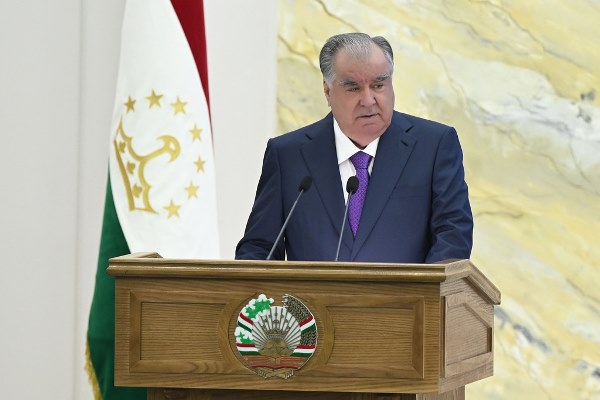
Dushanbe, The Gulf Observer: President of Tajikistan Emomali Rahmon has reaffirmed the government’s commitment to strengthening the rule of law, modernising the country’s legal system and improving access to justice, while inaugurating the new headquarters of the Ministry of Justice in Dushanbe.
Following the inauguration ceremony on July 14, President Rahmon met with the leadership and employees of the country’s justice authorities, congratulating them on the completion of the modern facility, which he described as a symbol of the state’s continued commitment to the development of the legal system and the creation of favourable working conditions for public servants.
Addressing the gathering, the President said the justice authorities play a vital role in protecting the constitutional rights and freedoms of citizens, safeguarding the rule of law and ensuring justice across the country.
He described the new Ministry of Justice building as more than an administrative facility, calling it “an expression of respect for the law, justice and the sustainability of national independence.”
President Rahmon highlighted Tajikistan’s rich legal and statehood traditions, noting that the country’s ancestors contributed to the development of universal values such as justice, the rule of law and legal culture. He paid tribute to Cyrus the Great, describing him as a global symbol of justice, tolerance and respect for human rights.
The President also welcomed UNESCO’s adoption of the resolution titled “Cyrus Cylinder: An Early Charter of Human Rights and Cultural Diversity,” initiated by Tajikistan, describing it as a source of national pride.
Reviewing progress since independence, President Rahmon said comprehensive legal reforms have been implemented to strengthen national statehood and modernise the country’s legal framework. He noted that during the independence period, the government has constructed modern justice facilities in 33 cities and districts, while administrative buildings in five additional districts have been fully renovated.
The President highlighted the government’s efforts to introduce electronic government, establish centralised legal information databases, digitise public services, and modernise notarial and civil registration services to improve transparency, expand citizens’ access to government services and strengthen social justice.
He stressed that justice institutions also have an important responsibility to enhance legal awareness and promote legal culture throughout society.
“The rule of law is the foundation of state stability, the guarantor of social justice and an essential condition for the peaceful life of the people,” President Rahmon said, directing the Ministry of Justice to intensify programmes aimed at improving legal awareness among the public.
During his address, the President reviewed the performance of the justice sector and outlined a series of reforms to address existing shortcomings. He instructed the ministry to improve the quality of draft legislation submitted to the government by strengthening professional expertise and adopting international best practices in legislative drafting.
President Rahmon also called for greater attention to addressing shortages of highly qualified specialists in international law, as well as in the registration and supervision of public associations.
He further instructed justice authorities to expand legal outreach through mobile legal services and public awareness campaigns to help citizens better understand their legal rights and resolve disputes more effectively.
The President directed the Main Department of Criminal Punishment Enforcement to comprehensively review its internal control mechanisms, personnel management, operational procedures and prison security measures, while strengthening efforts to prevent corruption and the smuggling of prohibited items into correctional facilities.
Referring to the recently adopted Law on Amnesty, enacted as part of celebrations marking the 35th anniversary of Tajikistan’s independence, President Rahmon stressed that the legislation reflects the country’s humanitarian policy by providing eligible offenders with an opportunity for rehabilitation and reintegration into society.
He instructed prison authorities to ensure the fair, transparent and impartial implementation of the amnesty law while preventing any corruption during its execution.
Looking ahead, President Rahmon called for continued modernisation of the country’s legal system through the wider use of digital technologies, particularly in notarial services, civil registration and legal service delivery. He also urged justice officials to improve their professional qualifications by studying international law and mastering at least two foreign languages.
Concluding his address, the President called on all justice personnel to continue serving the people of Tajikistan with responsibility, integrity and dedication.
The event concluded with a question-and-answer session between President Rahmon, Justice Minister Muzaffar Ashuriyon, and senior officials from relevant ministries and agencies, during which the Head of State issued further instructions and recommendations aimed at strengthening the country’s justice system.