President Emomali Rahmon Chairs Government Meeting Reviewing Key National Development Programs
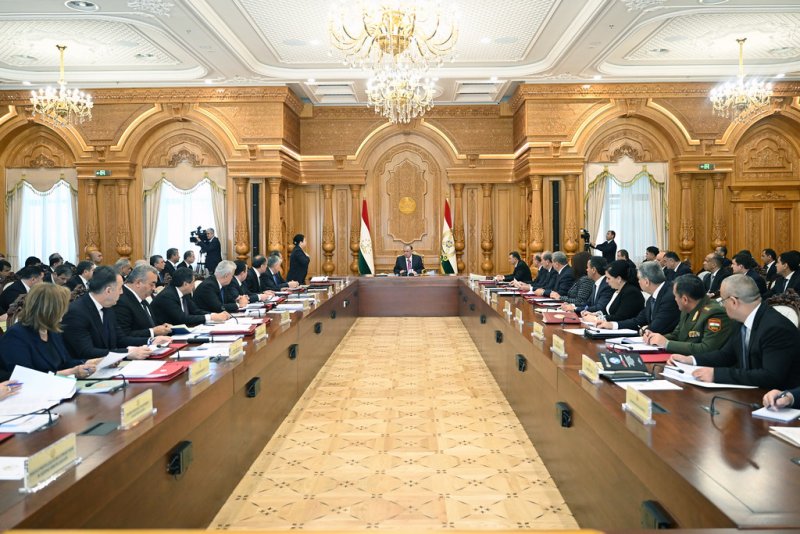
Dushanbe, The Gulf Observer: A meeting of the Government of the Republic of Tajikistan was held on May 28 under the chairmanship of President of Tajikistan and Head of Government, Emomali Rahmon.
At the outset, the meeting reviewed the draft Program for the Prevention and Control of Diabetes Mellitus in Tajikistan for 2026–2030 and the Program for the Development of the Pharmaceutical Industry for 2026–2030. Reports on both initiatives were presented by Health and Social Protection Minister Jamoliddin Abdullozoda.
It was emphasized that the diabetes prevention program aims to reduce incidence and mortality through early diagnosis, improved endocrinology services, expanded access to treatment, strengthened healthcare infrastructure, and enhanced training of medical and scientific personnel.
President Emomali Rahmon underlined that effective prevention also requires promoting healthy nutrition and an active lifestyle, including sports, physical exercise, and recreational activities in parks and natural environments.
During discussions on pharmaceutical sector development, officials highlighted plans to strengthen scientific research, expand domestic medicine production, introduce modern technologies, increase import substitution, and improve the supply of locally produced medicines and medical goods. The program also prioritizes the cultivation and processing of medicinal plants and attracting foreign investment into the sector. The President stressed the need to fully utilize existing potential to localize pharmaceutical production and support domestic manufacturers.
The meeting also heard a report from Education and Science Minister Rahim Saidzoda on the Program for the Protection of Children’s Rights in Tajikistan for 2026–2030. The initiative focuses on strengthening social policy for children, developing social services, preventing violence, and improving care and education systems.
While reviewing the Seed Industry Development Program for 2026–2030, President Rahmon expressed dissatisfaction with current performance and issued instructions to address existing shortcomings.
The government also approved the Tax Administration Development Program for 2026–2030, with particular emphasis on accelerating digitalization in the tax sector.
Discussion further covered cement production and domestic supply issues. Officials noted that cement remains a key material for infrastructure and construction development, with annual production increasing significantly from 300,000 tons in 2014 to over 5 million tons in recent years.
However, President Emomali Rahmon expressed concern over rising cement prices and regional shortages despite increased production. He highlighted deficiencies in production coordination, capacity utilization, market regulation, and distribution monitoring.
Authorities were instructed to stabilize the cement market, ensure full utilization of production capacities, and strengthen oversight of sales networks and intermediaries. The Ministry of Industry and New Technologies was tasked with coordinating enterprises and establishing a permanent market monitoring system, while the Anti-Monopoly Service was directed to inspect distribution networks.
Additional instructions were issued to relevant ministries and agencies, including those responsible for economic development, construction, energy, transport, environmental protection, geology, and railways, to ensure market stability, improved logistics, and compliance with standards.
The heads of the State Material Reserves Agency and Tajikmatlubot were instructed to procure cement directly from producers and ensure supplies to remote regions. A comprehensive market analysis is to be submitted to the government within one week, with measures to prevent artificial price increases also emphasized.
At the conclusion of the meeting, authorities were directed to intensify national beautification and development works in preparation for the 35th anniversary of Tajikistan’s Independence. Special emphasis was also placed on improving the teaching quality of the ancestral alphabet in educational institutions as part of efforts to promote national history and cultural heritage.