Tajikistan Reviews 2026–2030 Child Rights Protection Programme
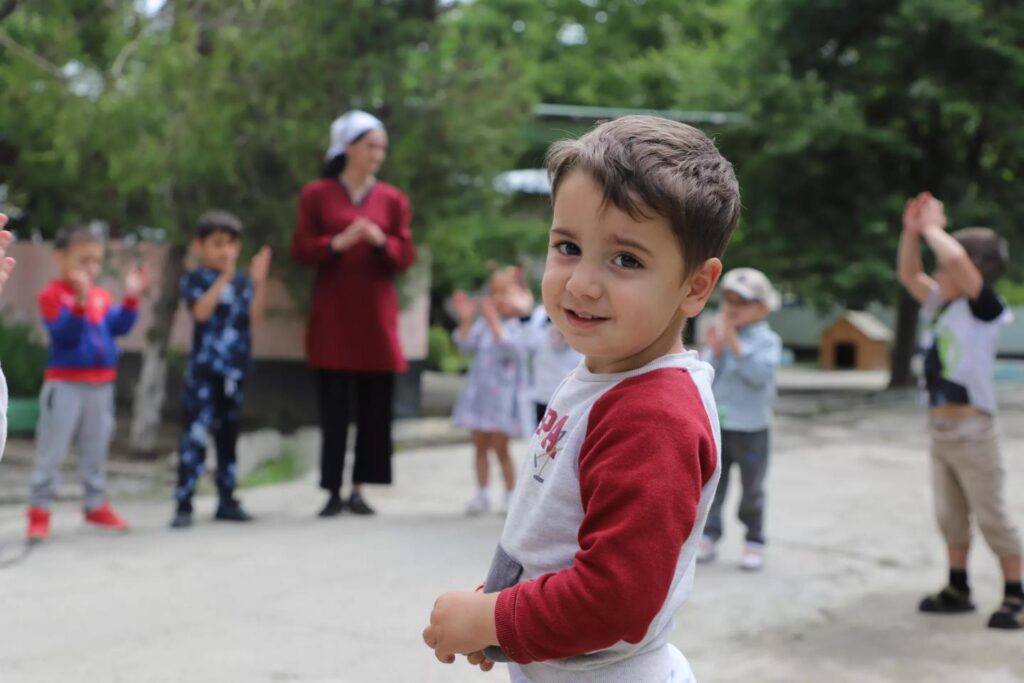
Dushanbe, The Gulf Observer: The Government of the Republic of Tajikistan on May 28 reviewed the Child Rights Protection Programme for 2026–2030, a key policy initiative aimed at strengthening the country’s social protection system for children, according to the national news agency AIMT Khovar.
The adoption of the programme comes on the eve of World Children’s Day, observed annually on June 1, and has been described as a meaningful gift for the nation’s younger generation.
The proposed programme seeks to reinforce state policy in safeguarding children’s rights, enhance social service delivery systems, prevent all forms of violence against children, and improve overall conditions for childcare, education, and upbringing.
Officials noted that Tajikistan, as a country with a young and growing population, has consistently prioritised child welfare through national legislation and international commitments. The government has ratified several key legal instruments and adopted practical measures at both national and local levels to eliminate the worst forms of child labour.
These commitments are reflected in the Constitution of the Republic of Tajikistan, the Labour Code, the UN Convention on the Rights of the Child (1989), as well as International Labour Organization conventions on minimum working age and the prohibition of the worst forms of child labour.
In addition, national laws such as “On Responsibility for the Education and Upbringing of a Child” and “On the Prevention of Violence in the Family” have been implemented to strengthen cooperation between families, educational institutions, and society, while ensuring stronger protection against domestic violence and abuse.
The government continues to place special emphasis on developing children’s skills, education, and creative potential, with increased investment in early childhood education. Preschool education has been identified as a priority area within the Ministry of Education and Science.
In his address to the Supreme Assembly on December 28, 2024, the President of Tajikistan, Emomali Rahmon, instructed authorities to ensure the construction of 800 preschool institutions and more than 1,000 general education schools over the next five years, with the aim of enrolling 50 percent of children in preschool education through all available funding sources.
Currently, the State Programme for the Development of Preschool Education for 2020–2025 is being implemented, while a new programme covering 2026–2030 is under preparation.
To further strengthen institutional protection of children’s rights and freedoms, Tajikistan established the Office of the Commissioner for Children’s Rights in 2016 on the initiative of President Emomali Rahmon. The institution will mark its 10th anniversary this year, reflecting a decade of dedicated efforts to advance child welfare in the country.