Uzbekistan Moves to Reform Business Penalty System, Enhance Judicial Oversight and Digital Transparency
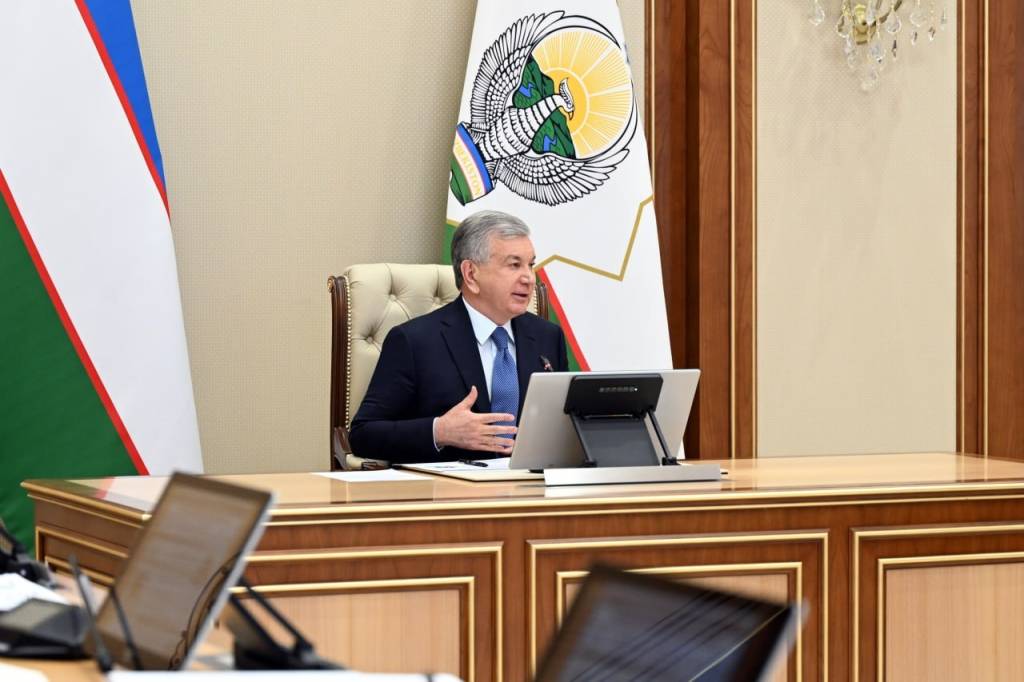
Tashkent, The Gulf Observer: President Shavkat Mirziyoyev on April 13 reviewed a series of proposals aimed at liberalizing the imposition of financial penalties on businesses, reducing bureaucratic hurdles, and strengthening judicial oversight over the actions of state bodies and officials.
During the presentation, it was highlighted that the current system of applying financial penalties remains imbalanced, with the majority of fines imposed by authorized administrative bodies while only a limited number are processed through the courts. This disparity, officials noted, underscores the need to reinforce judicial oversight and ensure greater fairness in enforcement.
Under the proposed reforms, a unified mechanism will be introduced from October 1 to encourage voluntary compliance. Businesses that pay 50 percent of a fine within one month of receiving a decision would be exempt from the remaining amount. Additionally, companies would be allowed to pay fines in equal installments over a six-month period, provided an initial payment of one-sixth is made within the first month, enabling automatic application of the installment plan.
To enhance judicial control, the proposals include a mechanism requiring the return of collected funds within 15 days if a financial penalty is overturned or invalidated by a court. Failure to meet this deadline would result in interest accruing daily based on the Central Bank’s main rate.
A significant focus was placed on the digitalization of penalty procedures. Authorities proposed the creation of an electronic register of financial penalties within the Unified State Control information system, to be administered by the Business Ombudsman. All decisions by authorized bodies would be required to be recorded in the system and verified with an electronic digital signature; decisions not meeting these requirements would be deemed invalid and unenforceable.
The reforms also envisage enhanced monitoring and record-keeping of penalties, online payment options via mobile applications, and the integration of information systems across relevant agencies. Businesses would be able to submit appeals through a personal online account, with enforcement of penalties automatically suspended upon the filing of an appeal.
Furthermore, a proposal was put forward to draft a new law “On Legal Enforcement Measures” to standardize procedures in this domain. President Mirziyoyev emphasized that safeguarding the rights and legitimate interests of businesses, promoting lawful entrepreneurial activity, and ensuring transparency and fairness in enforcement remain key national priorities.
At the conclusion of the meeting, relevant officials were instructed to further develop the proposals, strengthen judicial oversight, accelerate digital transformation, and establish a unified, clear, and equitable legal framework governing financial penalties.