Kazakhstan Enacts Sweeping Anti-Corruption Reforms, Introduces Tougher Penalties
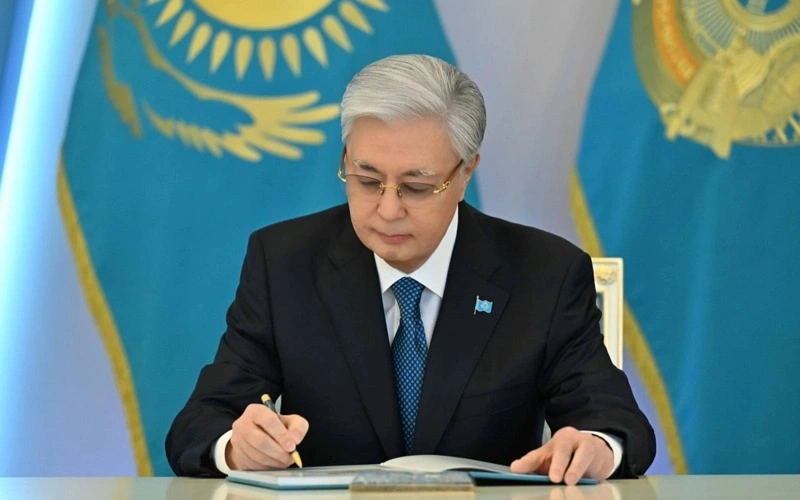
Astana, The Gulf Observer: President of Kazakhstan, Kassym-Jomart Tokayev, has signed into law a package of amendments aimed at strengthening the country’s anti-corruption framework, introducing stricter penalties, enhanced transparency measures, and broader accountability across the public sector.
According to official reports, one of the most significant changes under the new legislation is the introduction of criminal liability not only for the giving or receiving of bribes but also for the promise, offer, or demand of a bribe. The measure is intended to close legal loopholes and strengthen preventive efforts against corruption.
The amendments also establish a comprehensive mechanism for preventing conflicts of interest. Under the new provisions, civil servants and individuals holding equivalent positions are prohibited from using their official authority for personal benefit. Public officials will be required to disclose personal interests, while clear procedures have been introduced for identifying and managing potential conflicts of interest.
In a move aimed at enhancing integrity within state institutions, the law strengthens restrictions on relatives and related persons working within the same government bodies. These restrictions will apply not only in cases of direct subordination but also where indirect influence, internal oversight, or human resource management functions exist. Close relatives of agency heads, including nephews, brothers-in-law, and sons-in-law, will be prohibited from serving in the same institution.
The scope of anti-corruption regulations has also been expanded to cover employees of the quasi-public sector, as well as individuals participating in projects financed through the state budget and the National Fund.
Another key feature of the legislation is the formalization of the E-Qyzmet digital personnel system, which is designed to streamline and digitize human resource management processes across government agencies and quasi-public organizations through a unified electronic platform.
The law further strengthens accountability for illegal remuneration within government and quasi-public institutions. Administrative liability for legal entities involved in corruption offenses has been increased, while the statute of limitations for individuals accused of such violations has been extended from one year to three years.
Additionally, the amendments clarify restrictions for individuals convicted of corruption-related crimes. Those found guilty will face a lifetime ban from holding positions involving the performance of state functions, reinforcing the government’s commitment to ensuring integrity in public service.
The newly adopted legislation forms part of Kazakhstan’s broader efforts to strengthen good governance, promote transparency, and enhance public trust in state institutions through more robust anti-corruption measures.