How AI and Genomics Can Help the Gulf Achieve Food Security?
Food security has become one of the defining challenges of the 21st century. Climate change, rapid population growth, water scarcity, and disruptions in global supply chains have highlighted the vulnerability of food systems worldwide. For Gulf countries, where harsh climatic conditions and limited arable land constrain agricultural production, ensuring a stable and sustainable food supply has become a national priority.
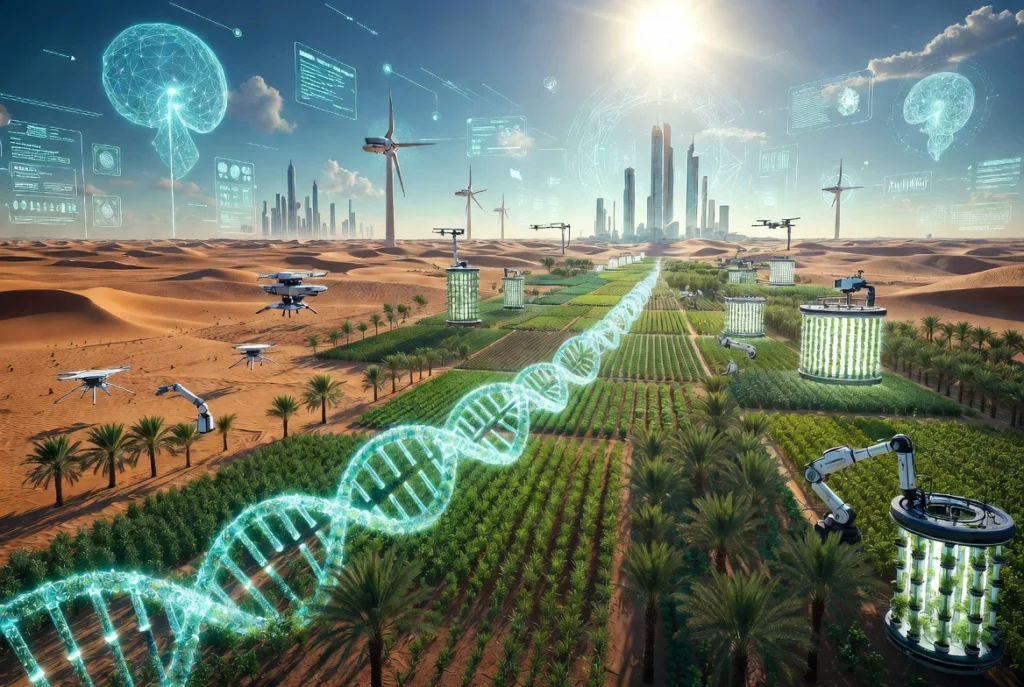
The Gulf Cooperation Council (GCC) countries have already demonstrated remarkable commitment to addressing these challenges through investments in agricultural innovation, controlled-environment farming, and digital technologies. The next major step in this transformation lies at the intersection of artificial intelligence (AI) and genomics—two rapidly advancing fields that together have the potential to reshape agriculture in the region.
Artificial intelligence is changing how farmers make decisions. Modern AI systems can analyze data from satellites, drones, weather stations, and soil sensors to provide real-time recommendations on irrigation, fertilization, and pest management. Instead of relying on fixed schedules or visual inspections, farmers can use predictive analytics to apply resources only where and when they are needed. This precision reduces production costs while conserving scarce water resources, one of the Gulf’s most valuable assets.
Genomics complements these technologies by unlocking the genetic potential of crops. Advances in DNA sequencing and transcriptomics enable researchers to identify genes associated with drought tolerance, heat resistance, disease resilience, and improved nutritional quality. These discoveries allow plant breeders to develop crop varieties that can thrive under the challenging environmental conditions common across the Middle East.
When AI and genomics are combined, their impact becomes even greater. Machine learning algorithms can analyze enormous genomic datasets to identify promising genetic traits much faster than conventional methods. Researchers can predict how plants will respond to environmental stresses before extensive field trials are conducted, significantly accelerating crop improvement programs. This integration shortens breeding cycles and supports the development of climate-resilient crops capable of maintaining high productivity despite increasing temperatures and water shortages.
The Gulf region is already laying the foundation for this future. Countries including the United Arab Emirates and Saudi Arabia are investing in smart agriculture, vertical farming, hydroponics, and agricultural biotechnology. These initiatives demonstrate a clear vision of reducing dependence on food imports while building resilient domestic production systems. Integrating AI-driven analytics with genomic research would further strengthen these efforts by enabling evidence-based crop selection and more efficient resource management.
Beyond improving crop yields, AI and genomics can contribute to environmental sustainability. Precision agriculture minimizes excessive fertilizer and pesticide use, reducing environmental pollution while protecting soil health. Water-efficient crop varieties can significantly lower irrigation demands, helping preserve groundwater reserves. Together, these innovations support agricultural systems that are both productive and environmentally responsible.
However, technology alone cannot solve food security challenges. Continued investment in research infrastructure, skilled scientists, digital agriculture, and international collaboration will be essential. Universities, research institutes, governments, and the private sector must work together to translate scientific discoveries into practical farming solutions. Training the next generation of agricultural scientists and bioinformaticians will also play a crucial role in sustaining innovation.
The Gulf has repeatedly demonstrated its ability to transform ambitious visions into reality. By embracing AI, genomics, and precision agriculture, the region has an opportunity not only to strengthen its own food security but also to become a global leader in sustainable agriculture for arid environments. The innovations developed for Gulf agriculture could ultimately benefit millions of people living in water-limited regions around the world.
Food security is no longer simply about producing more food; it is about producing food more intelligently. The convergence of artificial intelligence and genomics offers a powerful pathway toward resilient, sustainable, and climate-smart agriculture. For the Gulf, investing in these technologies today will help secure a healthier and more food-secure tomorrow.