Azerbaijan’s “Great Return” and the Challenges of Post-Conflict Revival
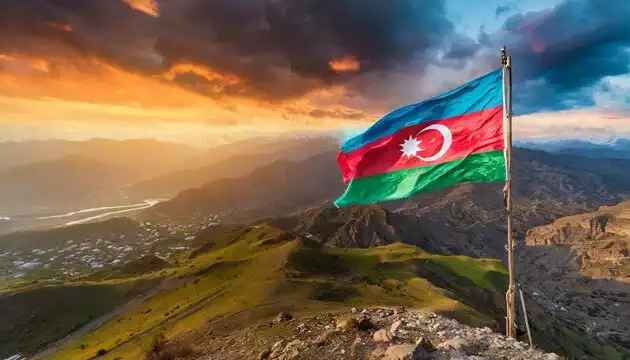

Today the regions of Aghdara and Khojaly in Garabagh are in a state of radical change that has been frozen for decades. Azerbaijan is now recovering with a purposeful policy of economic consolidation and mass resettlement of its people, something that was once believed to be impossible after tragedy. In Baku, more than a century of war is being drowned out by machinery, modern agriculture, the building of infrastructure and, at the very top, integration. The delegation headed by Samir Nuriyev, Head of the Presidential Administration, was of a high level, signaling the transition from military triumph to continued economic and demographic revival.
The “Great Return” Strategy
The centerpiece of this was the Great Return initiative that was a bold national plan to resettle hundreds of thousands of internally displaced persons (IDPs) from the 1990s. The method is more than just the rebuilding of houses. It imagines modern agrarian capitalism being fast introduced in areas that have not been connected to the international economy for almost three decades.
Recent visits demonstrated that tangible progress was being made:
- Frutti Agro LLC opened a fruit orchard in Chayli.
- Livestock complexes in Khanabad.
- Unspoiled mulberry plantations in Dashbulag.
- High-tech horticulture farms
The first phase of the Great Return is coming to an end and a second state program is being developed, officials said. The government is intentionally associating the resettlement with Azerbaijan’s long-term agricultural development policy (2026-2030), with the goal of transforming Garabagh into a highly efficient “food basket” that will help to meet the country’s food security needs and generate export profits.
Azerbaijan’s strategy is characterized by the firm technocratic determinism. Emphasizing economic sustainability, the state has determined that people are not going to come and stay if there are no jobs and livelihoods for them. Baku wants to build an unstoppable economic reality on the ground through corporate connections and implementing modern farming methods.
This is a rational wager for intensive, government-led development, towards sustainable peace through prosperity and integration.
Significant Structural Challenges
But there are significant challenges yet to be overcome:
Environmental and Water Constraints South Caucasus is at high risk from climate change. Rivers and reservoirs are heavily utilized by intensive farming and by the increasing population of civilians. This is an important vulnerability which is recognized by the delegation’s focus on “water security” and “modern management of water resources”. Success hinges on whether the land’s ecological strength is able to sustain the lofty expectations of agriculture.
Social and Human Dimensions There is more to be done than just building infrastructure and investing in the companies when a family is trying to make the transition from urban to rural, agrarian life. Key needs include:
- Robust social institutions
- Genuine community integration
- Vocational retraining for the long term
Way Forward and Conclusion
If it succeeds, Azerbaijan’s reconstruction of Garabagh will be a strong example for those countries coming out from a long conflict. It shows the possibilities of economic leverage, strategic planning and the integration of modern agriculture in restoring the war-ravaged areas and securely integrating them into the national fabric.
But it’s still a possibility. The social and ecological capacity of the land might outpace the infrastructure developments, and the “Great Return” might have to be scaled down in line with the quiet reality of soil and water and humans adapting.
The initiatives taken in Azerbaijan in Aghdara, Khojaly and beyond are a bold experiment to transform former frontlines into heartlands. Baku is trying to establish sustainable peace by linking the resettlement process to agricultural modernization and offering concrete economic opportunities. The obstacles in the way of climate resilience, water management, and social cohesion are indeed great, but the course of action is well-defined: turn tragedy into opportunity, and stagnation into growth.
The success of the “Great Return” will not only determine the fate of Azerbaijan but it will also provide many lessons in the post-conflict revival for the region and beyond.