Morocco Reaffirms Support for Arab Sovereignty, Urges Unity Amid Rising Regional Tensions
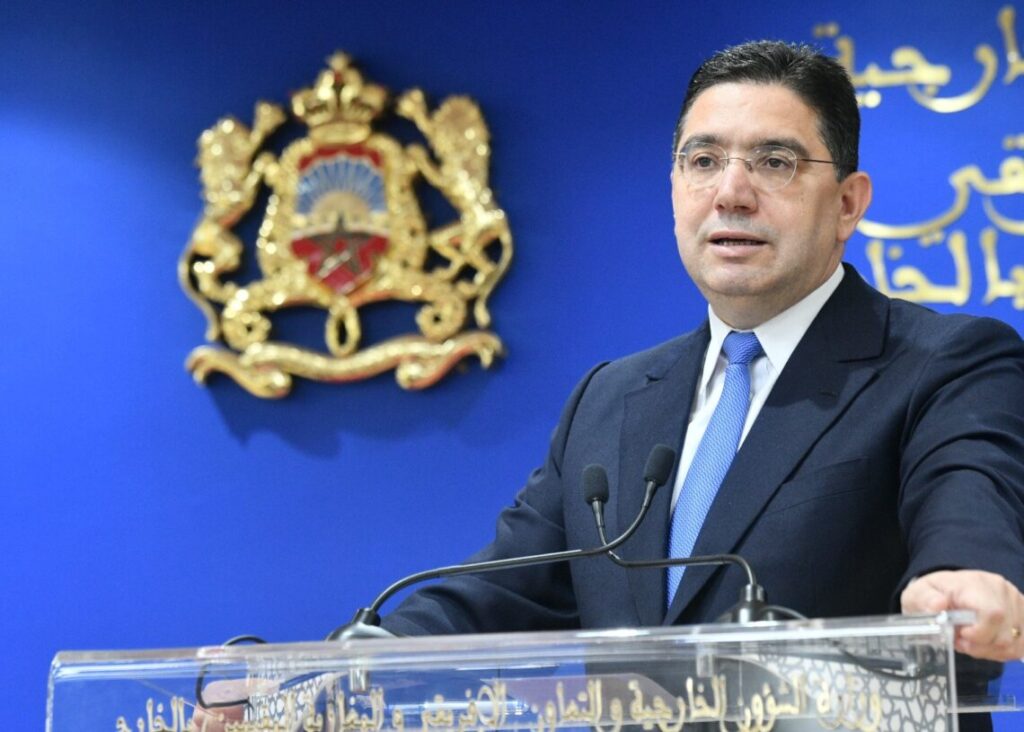
Rabat, The Gulf Observer: Morocco has reaffirmed its steadfast support for the sovereignty of Arab nations, as Foreign Minister Nasser Bourita addressed the 165th ministerial session of the Arab League held via videoconference, warning that escalating regional tensions could spiral into broader instability if left unchecked.
Speaking during the session, Bourita underscored that Morocco maintains a consistent policy prioritizing Arab sovereignty and regional stability. He noted that this approach aligns with the strategic vision of King Mohammed VI, which continues to guide Rabat’s response to evolving developments across the Middle East.
The foreign minister recalled Morocco’s early expression of support for Gulf countries amid the ongoing crisis, highlighting direct engagements between the King and regional leaders. These interactions, he said, conveyed Morocco’s clear condemnation of attacks targeting territorial integrity and civilian populations.
Describing the current situation as highly fragile, Bourita pointed to repeated strikes on critical infrastructure—including airports, ports, and energy facilities—affecting even countries not directly involved in active conflict. He warned that such developments are fueling widespread concern across the Arab world.
Bourita cautioned that continued escalation could push the region toward a wider confrontation with far-reaching consequences beyond the Middle East. He added that economic repercussions are already emerging, particularly in the form of disrupted trade flows and growing instability in global markets.
Addressing broader regional concerns, the minister also raised questions regarding Iran’s role, echoing apprehensions shared by several Arab states over what he described as a sustained pattern of destabilizing actions.
Morocco called for a unified and coordinated Arab response grounded in clarity and solidarity. Bourita urged adherence to international resolutions and demanded an immediate cessation of hostilities. He further supported measures enabling Arab nations to safeguard their territories, airspace, and maritime routes.
Despite the tense environment, Morocco reiterated its commitment to diplomacy. Bourita emphasized that dialogue remains the most credible path to de-escalation, reaffirming Rabat’s support for mediation efforts aimed at restoring calm and preventing further crises.
Morocco’s position reflects a broader effort to balance firm political messaging with constructive engagement, as it seeks to maintain its role as a stabilizing voice in a volatile regional landscape.
The Middle East has been gripped by intensifying conflict since the US-Israel strikes on Iran February 2026, when joint military operations targeted key Iranian military infrastructure along with some civilian sites, triggering direct confrontation between Tehran and its adversaries.
In response, Iran launched waves of missile and drone attacks on Israeli territory, U.S. military bases, and several Gulf states, further escalating tensions. The strategic Strait of Hormuz—through which nearly one-fifth of the world’s seaborne oil passes—has faced near-closure, disrupting shipping and pushing crude oil prices toward record highs amid supply concerns.
According to the Human Rights Activists News Agency, at least 3,461 people have been killed in Iran since the outbreak of hostilities. Reports indicate that 19 people have died in Israel, while 13 U.S. military personnel have also been killed. Casualties continue to rise across the region, with no immediate resolution in sight.