Türkiye Seeks Expanded Defense, Technology Cooperation with Japan, Says Fidan
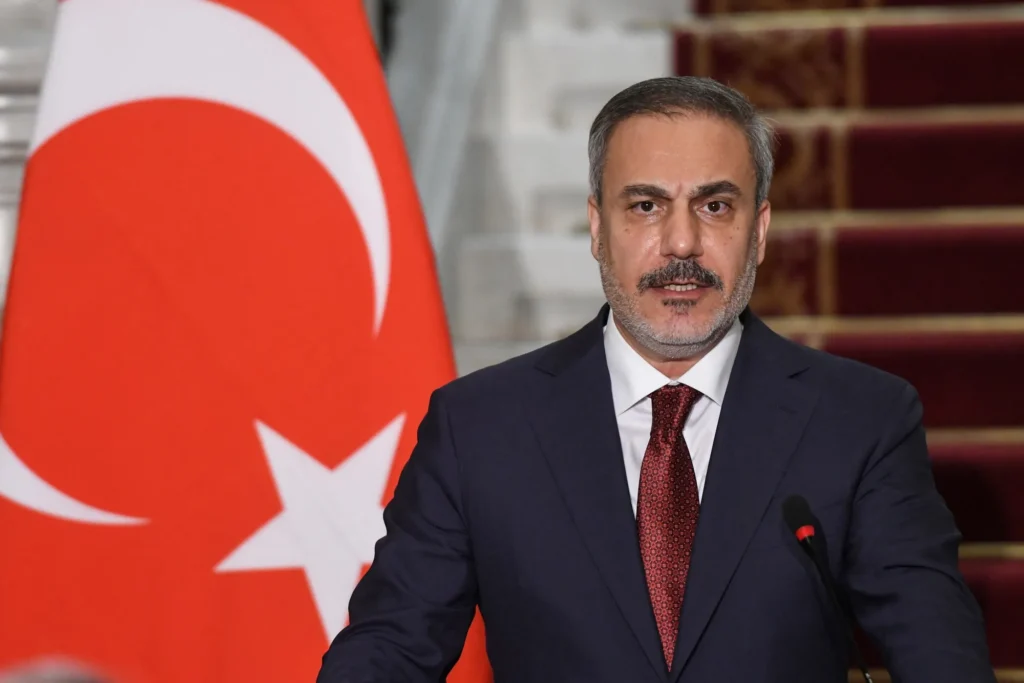
Ankara, The Gulf Observer: Türkiye is ready to strengthen cooperation with Japan in the field of unmanned aerial vehicles (UAVs), with joint development and production offering significant opportunities for both countries, Turkish Foreign Minister Hakan Fidan has said.
In an interview with Nikkei Asia, Fidan highlighted Türkiye’s growing position as a leading producer of drone technology and expressed Ankara’s willingness to deepen defense-industrial ties with Tokyo.
“Türkiye and Japan have complementary capabilities, and we believe there is strong potential for mutually beneficial collaboration,” Fidan said, noting that Turkish drone technologies have demonstrated their effectiveness in a variety of operational environments.
He emphasized that Türkiye’s advanced and field-tested capabilities in unmanned aerial systems and anti-drone technologies could provide a solid foundation for joint development and co-production projects with Japan.
Beyond defense cooperation, Fidan pointed to considerable untapped potential between the two countries in sectors such as energy, digital transformation, aerospace technologies, robotics, and resilient supply chains.
Discussing Türkiye’s critical minerals sector, he said Ankara’s objective extends beyond resource extraction and focuses on producing high-value-added intermediate and finished products. He noted that cooperation with Japanese technology and investment could create a mutually beneficial partnership in this field.
Fidan also reported progress in negotiations on a bilateral social security agreement, expressing optimism that an accord could be finalized in the near future.
On regional developments, the foreign minister said ongoing negotiations between Iran and the United States appeared closer than ever to reaching a positive outcome, stressing that both sides were seeking a constructive conclusion. He noted that attention has increasingly shifted to the Strait of Hormuz following the ceasefire between the United States, Israel and Iran, warning that disruptions in the strategic waterway pose serious challenges to energy and food security while contributing to rising global prices.
Addressing Middle East issues, Fidan reiterated Türkiye’s support for a two-state solution to the Israeli-Palestinian conflict. He said Ankara had suspended trade relations with Israel over the humanitarian situation in Gaza and maintained that normal relations could resume if violence ceased and humanitarian access was fully restored.
The Turkish foreign minister also called for greater regional cooperation, arguing that countries including Pakistan, Türkiye, Saudi Arabia, Egypt and Gulf states have a significant opportunity to build a framework for long-term stability and prosperity. He suggested that Iran could eventually become part of such a cooperative platform once conditions normalize.
Regarding NATO, Fidan said Türkiye hopes to host leaders and defense ministers from the alliance’s Indo-Pacific partners, including Japan, South Korea, Australia and New Zealand, during the NATO summit scheduled for July in Ankara, subject to the approval of all member states.
Commenting on the possibility of U.S. President Donald Trump attending the gathering, Fidan said preparations are being made on the assumption that the American leader will participate, noting that there had been no indication to the contrary during recent contacts between President Recep Tayyip Erdogan and Trump.
The remarks reflect Türkiye’s broader efforts to expand strategic partnerships in Asia, strengthen its defense industry cooperation, and promote regional stability through dialogue and multilateral engagement.