UNESCO Approves Oman-Initiated Sultan Haitham Prize to Safeguard Intangible Cultural Heritage
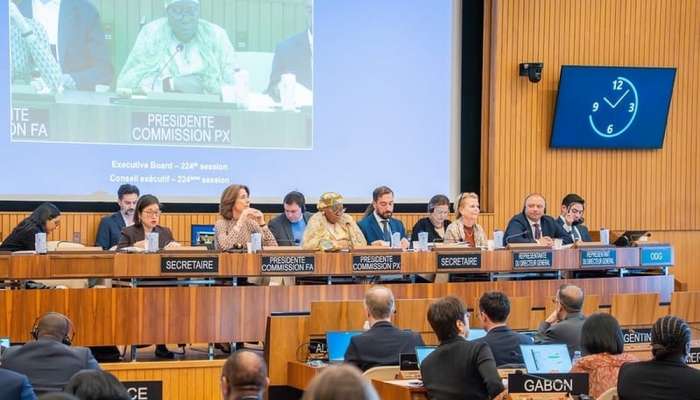
Paris, The Gulf Observer: UNESCO has approved the establishment of the UNESCO-Sultan Haitham Prize for the Safeguarding of Intangible Cultural Heritage, marking a significant step that reflects international recognition of the Oman’s pioneering role in preserving intangible cultural heritage and promoting it as a shared human legacy.
The prize is the outcome of a joint initiative spearheaded by Oman’s Ministry of Culture, Sports and Youth, in collaboration with the Ministry of Education and the Oman National Commission for Education, Culture and Science, alongside coordination with the Sultanate’s Permanent Delegation to UNESCO. Its framework has been carefully designed in alignment with global standards for safeguarding intangible cultural heritage.
Oman was among the early adopters of the 2003 Convention for the Safeguarding of the Intangible Cultural Heritage, having ratified it through Royal Decree No. 56/2005. Since then, the Ministry of Culture, Sports and Youth has played a key role in implementing the convention, including registering cultural elements on UNESCO’s Representative List, the List in Need of Urgent Safeguarding, and the Register of Good Safeguarding Practices.
The initiative also reflects the longstanding cultural vision of His Majesty Sultan Haitham bin Tarik, whose leadership has significantly advanced the country’s cultural sector. His tenure has seen the establishment of major cultural institutions such as the National Museum, Oman Across Ages Museum, the National Records and Archives Authority, and the Sayyid Tarik bin Taimur Cultural Complex, alongside the expansion of cultural centers and libraries across the Sultanate.
The newly established prize is expected to emerge as a leading global platform recognizing outstanding contributions in the safeguarding, preservation, documentation, and sustainability of intangible cultural heritage. It will honour individuals, institutions, organizations, and governmental and non-governmental bodies engaged in protecting cultural traditions and practices.
The award aims to support global cultural efforts by recognizing initiatives that safeguard and transmit intangible heritage as defined under Article 2 of the 2003 Convention. It also seeks to strengthen the role of cultural heritage in promoting social cohesion, peace, equality, and sustainable development, while enhancing awareness and mutual appreciation at local, national, and international levels.
Additionally, the prize will contribute to the effective implementation of UNESCO’s cultural agenda and align with the organization’s 2030 Sustainable Development Goals, particularly in the areas of quality education, sustainable communities, and strong institutions. It will also support knowledge exchange through UNESCO’s global platforms dedicated to heritage preservation.
Sayyid Saud bin Hilal Al Busaidi, Minister of Culture, Sports and Youth, stated that the establishment of the prize underscores global recognition of Oman’s contributions to safeguarding intangible cultural heritage and elevating its importance within international cultural policy.
He noted that the initiative enhances UNESCO’s cultural framework by positioning intangible heritage as a cornerstone of human identity and a bridge for intercultural dialogue, while encouraging innovation and community participation in heritage preservation. He further emphasized that the prize aligns with sustainable development goals by fostering social cohesion, mutual understanding, and respect among nations.
The prize will also promote research and innovation in cultural heritage, strengthen educational dimensions, and support the intergenerational transmission of knowledge, thereby enriching cultural dialogue and reinforcing universal values of tolerance and human understanding.
Covering all UNESCO-recognized domains, the prize will include oral traditions, performing arts, social practices, festive events, knowledge related to nature, and traditional craftsmanship. Eligibility will extend to institutions, community organizations, NGOs, and cultural bodies that have demonstrated significant contributions to safeguarding and promoting intangible cultural heritage, with detailed criteria to be finalized by UNESCO in coordination with Oman’s Ministry of Culture, Sports and Youth.