Operation Sindoor: Mr Modi’s Strategic Blunder

On the basis of a mistaken belief in the strength of its armed forces, the political leadership of India chose to initiate Operation Sindoor against Pakistan. The eventual outcome, which took the form of India’s humiliating defeat, came to symbolise the considerable gap between the supposed military power that was imagined and the actual capability that the Indian Armed Forces, particularly the Indian Air Force (IAF) were able to demonstrate. It proved to be far less than what had been assumed.
Apparently, the Indian Armed Forces had been advising the political leadership against embarking on a misadventure against Pakistan. Nevertheless, disregarding the counsel of his military, Mr Modi, with his gung‑ho attitude and hubris, pressed ahead and crafted the false‑flag Pahalgam attack. Without a proper and impartial investigation into the attack, and in an attempt to revive his declining popularity, Mr Modi placed the blame on Pakistan and violated its sovereignty during the night of 6–7 May by using standoff weapons.
This was a grave mistake made by New Delhi as it incurred the full rage of the Pakistan Air Force (PAF) led by Air Chief Marshal Zaheer Ahmed Baber Sidhu. Showing gallantry and resolve, the Air Chief shifted PAF’s posture from defence to full‑scale offence within minutes of India’s strike. He employed multi‑domain operations that combined cyber, space, electronic warfare and long‑range strike capabilities, throwing IAF formations into confusion.
Despite IAF’s professionalism, PAF’s superior awareness of the battlespace created a decisive advantage. In an unprecedented night‑time battle fought beyond visual range and lasting an hour, PAF pilots downed eight Indian aircraft including four Rafales, a MiG‑29, a SU‑30MKI, a Mirage‑2000 and a Heron drone, grounding the IAF for two days. Indian fighters stayed 300 kilometres from the border for the rest of the war, while Pakistan successfully repelled Indian drone swarms and BrahMos attacks.
On 10 May, Pakistan responded with coordinated and measured strikes as PAF neutralised 34 strategic targets including two S‑400 batteries, multiple air bases, BrahMos storage sites, brigade headquarters, and many others. This marked a military defeat for India, which then appealed to the US for a ceasefire.
India’s military defeat was not the end of its woes. The greater setback came on the diplomatic front, where New Delhi’s carefully cultivated image as a net security provider collapsed beyond repair. It also lost its stature of becoming a regional power.
In contrast, Pakistan’s Armed Forces and diplomatic standing rose sharply. Islamabad received a flurry of high‑level visits that included between 12–15 Air Chiefs from different countries, close to 10 foreign dignitaries and around 10 senior military officials. These visits focused on bilateral cooperation in multiple domains ranging from defence and security to education and health.
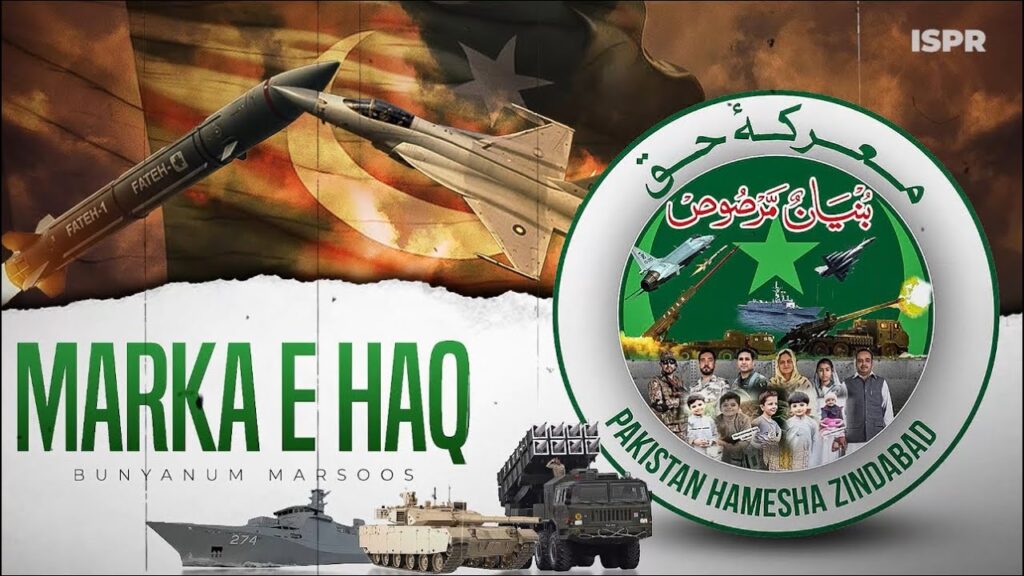
Following Marka‑e‑Haq, Pakistan converted its battlefield credibility into diplomatic influence, most notably by hosting and facilitating talks between the US and Iran in Islamabad. Therefore, Pakistan’s enhanced credibility allowed it to take on the role of mediator between the US and Iran to seek lasting peace in the Middle East and Gulf region. This is a feat which was not achieved in the last 47 years.
Pakistan’s success in hosting US‑Iran mediation talks has been viewed with anguish and frustration within the Indian hierarchy. This has been illustrated through the non‑parliamentary language used by Indian Foreign Minister, leaders, and the press.
Moreover, the aftermath of Marka‑e‑Haq has markedly revealed India’s diplomatic isolation, particularly as its principal allies have signalled a decline in unconditional support for New Delhi’s regional narratives. This stems from Mr Modi government’s inability to provide credible evidence of Pakistan’s involvement in the Pahalgam incident.
Once regarded as a state of considerable diplomatic stature and military strength, and often projecting itself as a peacemaker and an influential actor on the global stage, India has been brought down several notches following its defeat in Marka‑e‑Haq. Despite its economic weight and democratic claims, it now finds itself diplomatically sidelined.
Other factors have compounded this decline in credibility. Mr Modi’s overt embrace of Hindutva, redefining Indian identity through Hindu cultural and religious values and promoting the notion of a Hindu Rashtra, has adopted a hardline stance against minorities, particularly Muslims. This approach has drawn criticism from Muslim states and eroded India’s standing as a secular nation.
Furthermore, widespread human rights abuses against minorities have tarnished India’s image as a unitary and democratic state, undermining its ability to operate as an emergent power and destabilising its international reputation.
Conclusively, the ripples of India’s defeat in Marka‑e‑Haq did not remain limited to a military or political mistake. It has had diplomatic repercussions for the country as New Delhi finds itself isolated from its key allies. For Pakistan, its steady yet diligent diplomatic efforts and military performance have proven to be effectual in raising the country’s global stature and credibility.